My interviewee was Sister Fe Bigwas, a sister occupying in Our Lady of Mercy church in Westlake. Sister Fe was born on the island of Mindanao. She was sent here through her religious ministry, RVM, which stands for the Religious of the Virgin Mary. Her first place of occupation was Sacramento, then she was sent to work here in Daly City. She now works as a teacher and youth administrator at OLM.
I interviewed an immigrant names Levi M. Lacanienta. He came to America in December of 1984 at the age of twenty four. Levi came to America because of his father, who highly encouraged him to come after he finished his time in the military. He is married and has two kids; both were born and raised in the United States. Coming to America gave him sense of opportunity to begin a new life, one that made it easier for him to find work than in the Philippines. When he first came to America, he began work as a banker, as he was in the Philippines. Today, he works as the department head of duplicating services in City College of San Francisco.
1) Background 2) Original Thoughts of America 3) Citizenship 4) Family Obligations, Economics, and Politics 5) Homesickness and Nostalgia 6) First Coming to America 1) Background Levi talking about his current life, his family, and his work.
Genaro Diaz initially came to the United States on an athletic visa as an Olympic hopeful representing Mexico. Upon his arrival he decided that the opportunity was to great to pass up, he would stay after his race and eventually bring his wife and newborn son to the united States.
Table of contents
Part I - Introduction
Part II - Growing up in Oaxaca, Mexico
Part III - Plans, Goals & the Olympics
Part IV - Change of Plans
Part V - Reality of the U.S.
Part VI - Initial experiences
Part VII - Opportunity
Part VIII - Living in Daly City
Part IX - Remittances
Part X - Assimilation
Part XI - Would you do it over?
Part I- Introduction
These photos chronicle Mr. Diaz' early years in Oaxaca, Mexico.
With his three younger brothers.
Communion day, the first time he wore closed shoes.
Part II Growing up in Oaxaca Mexico
With parents on the day of his communion.
Part III Plans, Goals & the Olympics
Genaro's 1:04 half marathon
Training
Part IV Change of Plans
Genaro with family in Mexico.
Genaro with with and son.
PART V Reality of the U.S.
PART VI Initial Experiences
PART VII Opportunity
Genaro (with son) at a hotel for a race running for Trade Tech.
PART VIII Living in Daly City
PART IX Remittances
PART X Assimilation
Genaro and his son, Fernando, a future collegiate runner.
The person I interviewed for my Oral History project was my mother Jane F. de Guzman. We talked about several interesting topics like about her life in the Philippines. her struggle coming to the Philippines and the life she had living in America, we also talked about her family being petitioned to come to America. She told me about how my grandma came to America and worked her hard
out here to provide for her family back home. My grandma became a United States
citizen. For many Filipinos it is
very important to be an American citizen because once you are an American
citizen life in America will seem a lot easier than not being a citizen. For my
grandma for example she wanted to be an American citizen because she felt
obligated to bring her four kids here in America.
Jane's' life in the Philippines Part
Jane's Life in the Philippines part 2 Migrating to America
Living in America
After interviewing my mom Jane de Guzman I learned to appreciate her more and I better understood her struggle as a flipina coming to America. All her life, life hasn't come easy for her. Being in school in America was not easy for her at first because of all the bullying she was put through just because she was an immgrant that just came ti America. But rain or shine she looks at the good parts in her life and does not let the negativity get her down. My mom plans to stay in America and she said she would rather stay here in American than go back to the Philipiines
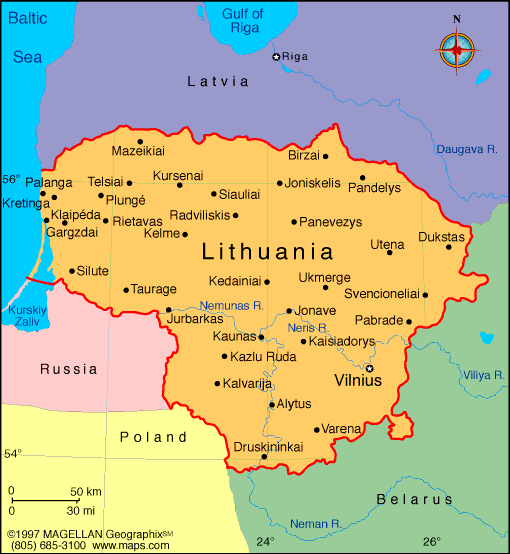
Greta is from a small country called Lithuania. When Greta came to the United States from Kaunas, Lithuania at age 11, she faced many obstacle's. Greta moved to the U.S. after her mother won a lottery to obtain green cards for Greta, her twin brother, and her mom. Greta hardly spoke any English and wasn't taught before she was thrown into public school in San Francisco. Thankfully, Greta had a twin brother to go through the tough experience with, and a grandmother who would fly her to Lithuania to visit as often as possible; usually once every year or once every-other year. These visits helped Greta and her brother to feel less homesick and keep in touch with their Lithuanian roots and the family they left behind.
Table of Contents
Life in Lithuania
Expectations of the USA
Coming to the USA
Family Support
Staying in Touch
Life in Lithuania
Kaunus, Lithuania
In this section, Greta tells us about her house and life in Kaunus, Lithuania.
Greta and her dog in Lithuania.
Expectations of the U.S.A
Greta tells us what she expected life in the United States to be like.
Coming to the U.S.A
Greta explains her first experiences in the United States and how she felt.
Family Support
Greta discusses the support she feels from her family back in Lithuania.
Greta, her twin brother Lucky, and their cousin.
Staying in Touch
Greta tells us how she stays in touch with her Lithuanian roots and prevents feeling homesick, while still being halfway around the world.
Greta and her grandmother, who helps her keep in touch with her Lithuanian roots and feel less homesick.
St. Casimir Church in Los Angeles. The only Lithuanian-Catholic Church in California.
Susan Laxa came to America as a focused, yet inexperienced 26-year-old that was ready to take on the world. Growing up Batangas City, Batangas, her family of 11 brothers and sisters has made becoming a nurse in America all the more important. There was not a doubt in her mind that she couldn't do what she set out to do; her resolve was and continues to be strong. Here, we look into the life of Susan past and present--her life in the Philippines, her life beginning in America, and her life now.
Blog Content:
Family Background
(Life in the Philippines)
Leaving the Philippines
(Expectation of America)
Settling in the United States
(Adjusting to America)
Reflection
(Her Life Now)
Family Background:
Here, Susan talks about her family and takes us back to a time in her life where drinking water out of a cup made from newspaper was a norm.
Leaving the Philippines:
Susan tells us why she made the decision to move to America.
Settling in the United States:
Susan comes to America and gets accustomed to the American lifestyle.
Reflection:
Susan would rather stay here in America as opposed to moving back to the Philippines, but wouldn't mind visiting. The benefits of living in America outweigh the benefits of home (family) in the Philippines.